The RoboCup German Open Championships are held annually. In her opening speech, Federal Minister of Research Dorothee Bär emphasized that the participants' infectious energy and the competition's innovative spirit send a clear signal about the future of German robotics. In the @Home League, service robots are tested for their ability to support people in need in everyday environments. These intelligent domestic robots exemplify AI-based, multipurpose robots, which the German government aims to promote through flagship projects in the AI Robotics Booster of the High-Tech Agenda Germany.
New Rules
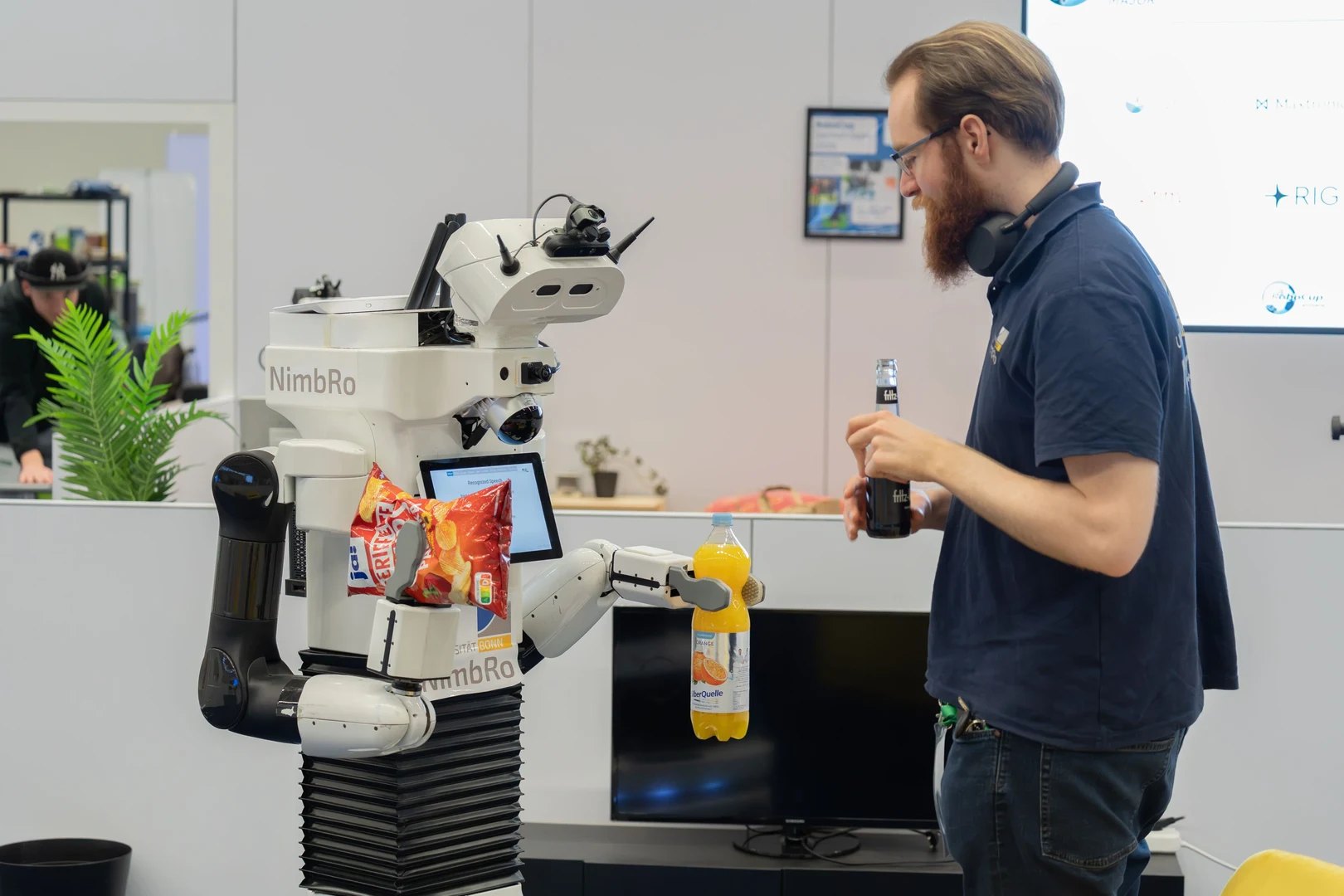
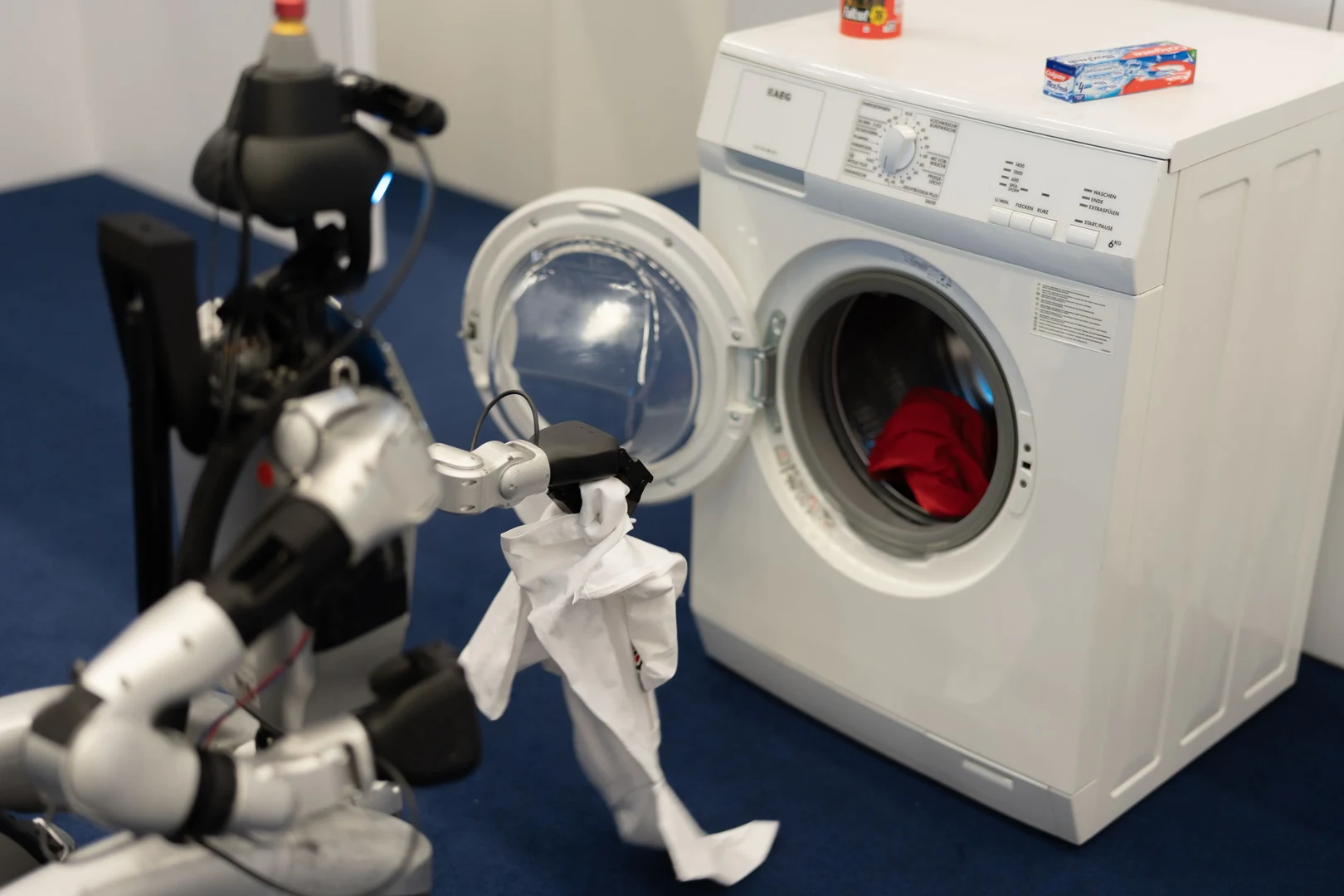
This year, the competition rules underwent a major overhaul. In the preliminary round, the robots had to demonstrate their abilities in five complex tests in a realistic domestic environment and an unfamiliar restaurant setting. The robots were required to welcome visitors and introduce them to others, tidy the kitchen, set the breakfast table, remove laundry from the washing machine, and fold it. They also had to serve guests in the restaurant. The general-purpose service robot test was particularly challenging, as it required the robots to understand complex voice commands from people requiring assistance and to carry them out autonomously.
New Assistance Robot
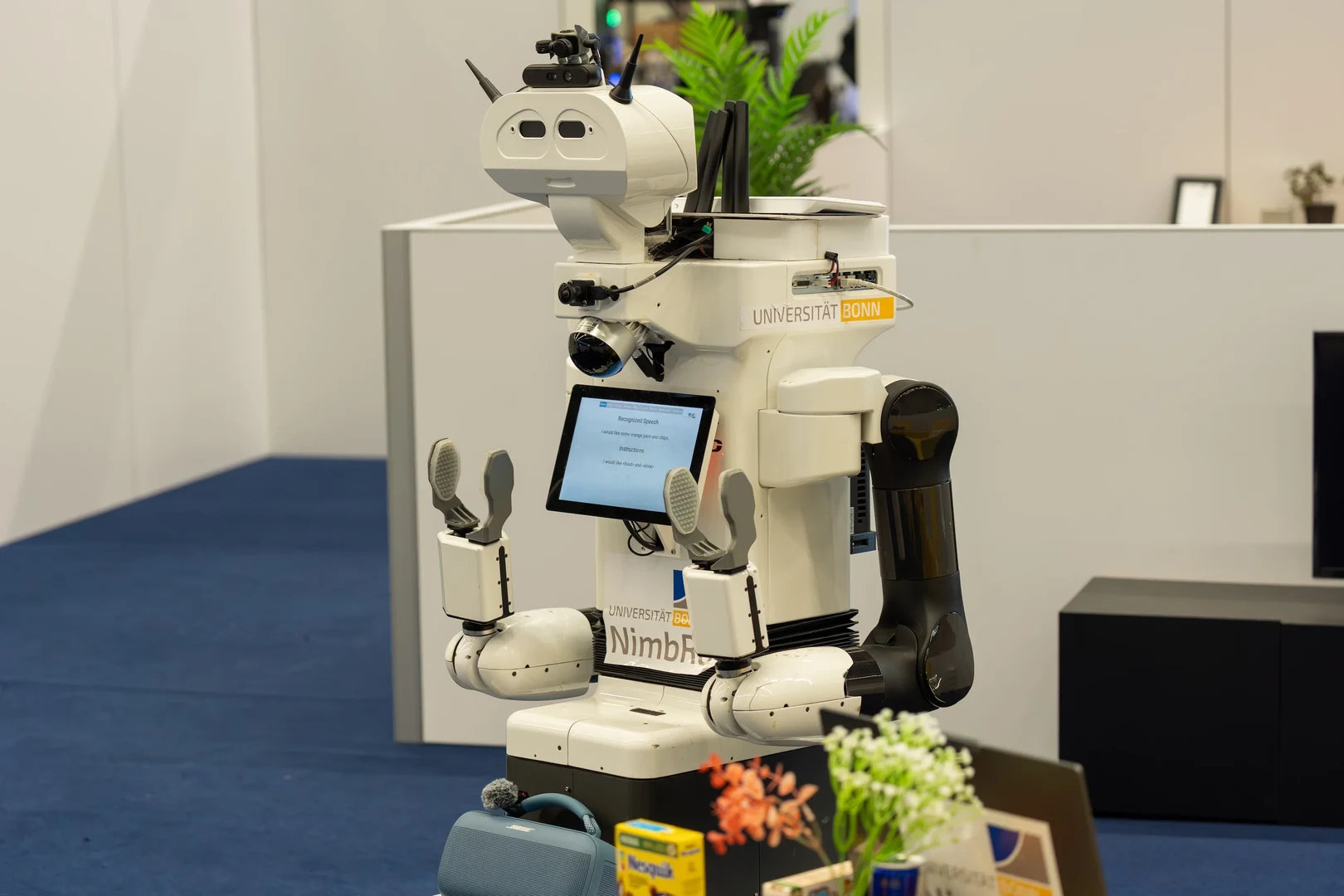
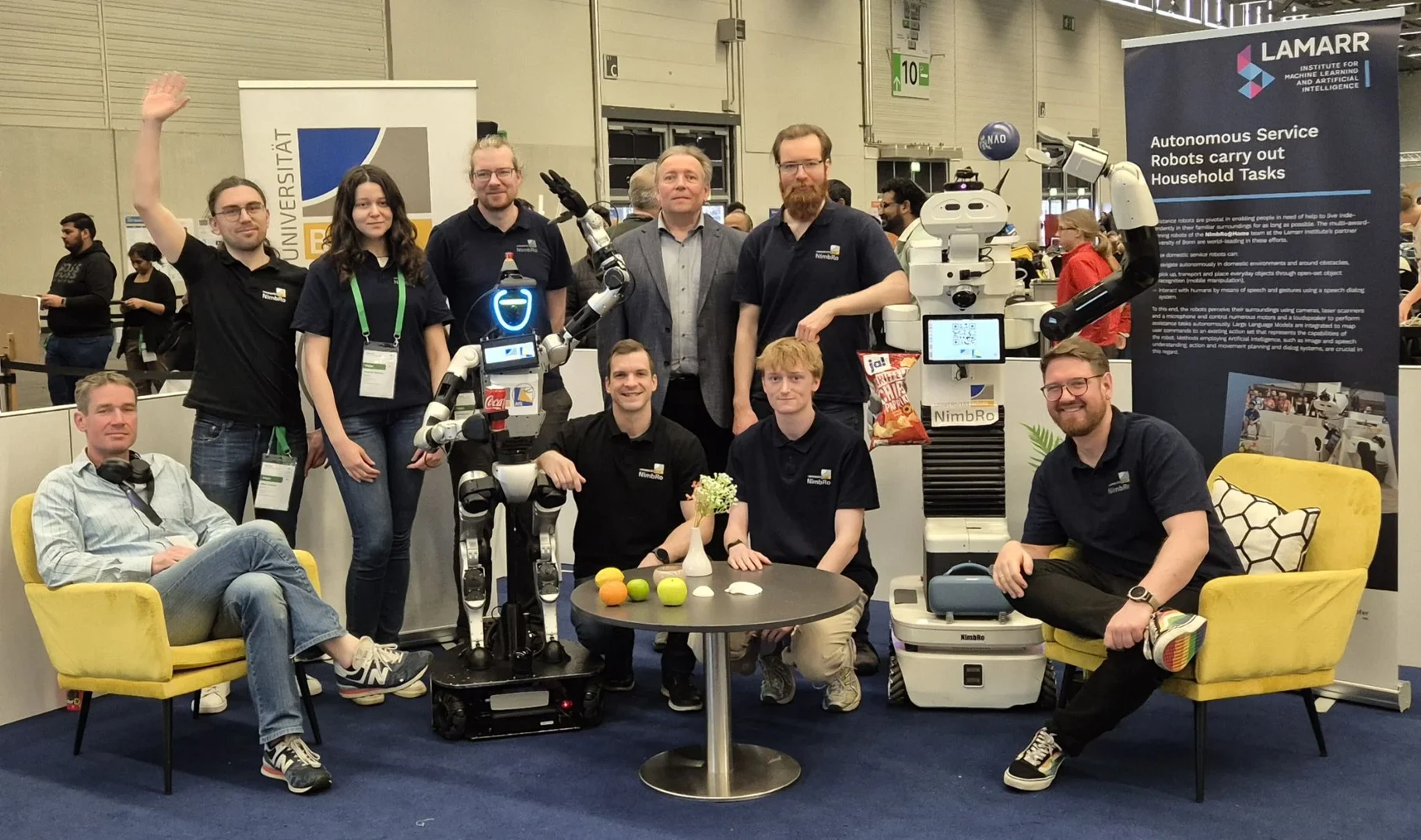
In addition to last year's tried-and-tested domestic service robot, the NimbRo team from the University of Bonn deployed a new, lighter assistance robot for this competition. This robot has a human-like upper body with two articulated arms that end in three-fingered hands with tactile sensors. The robot perceives its surroundings using cameras, laser scanners, and a microphone. It navigates sefely on an omnidirectional base in confined indoor spaces and was used to remove laundry from the washing machine.
A clear victory
NimbRo took an early lead in the preliminary round and extended it in the final. There, the robot from Bonn demonstrated its ability to open the front door, close the dishwasher, and understand complex voice commands. NimbRo won the overall standings with 200 points, far ahead of Team ToBi from Bielefeld University, which scored 57 points.
Research at the Institute of Computer Science
The Bonn-based household robots are being developed at the Chair of Autonomous Intelligent Systems at the University of Bonn. Prof. Dr. Sven Behnke, Director of Department VI at the Institute of Computer Science, Intelligent Systems, and Robotics, as well as Head of the Embodied AI research area at the Lamarr Institute for Machine Learning and Artificial Intelligence, said after the competition: "Our research aims to enable people in need of assistance to live independently for longer in their familiar surroundings." Behnke is also a member of the Transdisciplinary Research Areas (TRA) "Modelling" and “Sustainable Futures” as well as the Cluster of Excellence “Phenorob” at the University of Bonn. Since everyday environments present numerous challenges, much research and development work, as well as transfer to practical applications, is still required. Methods of artificial intelligence and machine learning are crucial for this.